

For many small businesses, your website is the best tool for attracting new leads and customers. Whether you’re in construction, home remodeling, professional services, or another industry, one of the best ways to improve your website’s effectiveness is to build trust with visitors.
An expert resource on this topic is The Seven Principles of Persuasion by Dr. Robert Cialdini, whose research outlines seven psychological principles that influence decision making and buyer behavior.
If you’re goal is to create a more conversion-focused website, we’ve gathered seven website design examples that show how businesses use persuasion to build credibility, strengthen trust, and encourage buyers to take action.
Use social proof to show big-time results
Social proof is the idea that people look to others when making decisions. If they see that others have trusted your business then they’re more likely to trust you as well.
A few common examples of social proof include:
-
Client testimonials for professional services firms
-
Case studies for B2B companies
-
Project galleries for home remodeling, architecture, or construction companies
-
Customer/project counts or subscriber numbers
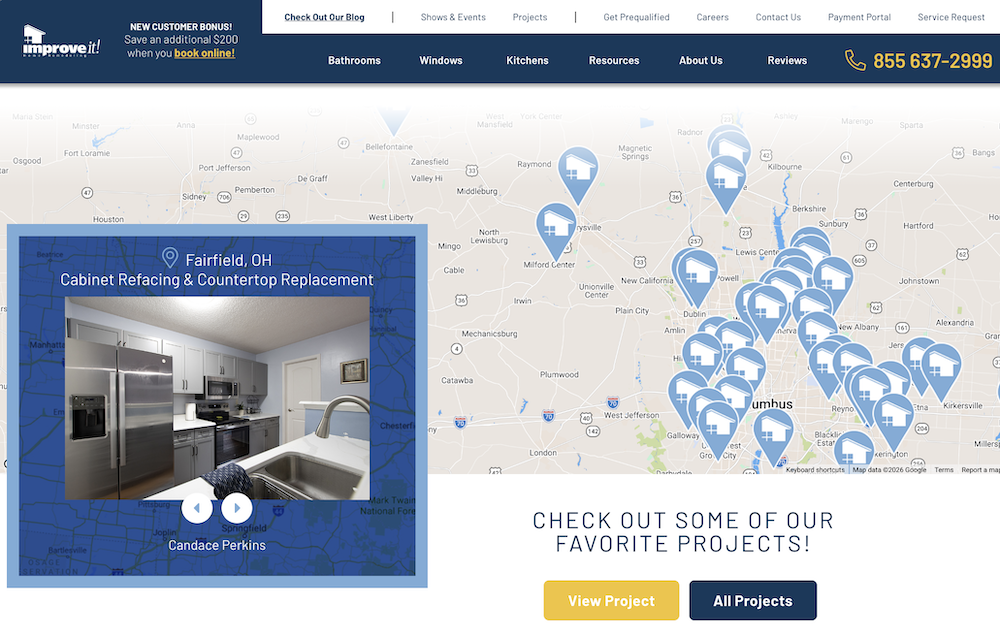
One effective web design example can be seen on the website for Improve It– a home remodeling company in Massachusetts. Their website features a map showing completed projects throughout their service area. This visual helps potential customers see where the company has worked and demonstrates a strong track record in the local community.
Create urgency with scarcity
Scarcity reminds people that opportunities are limited. That limitation might be related to time, availability, or a special offer. Visitors are more likely to take action when they believe they could miss out on something valuable.
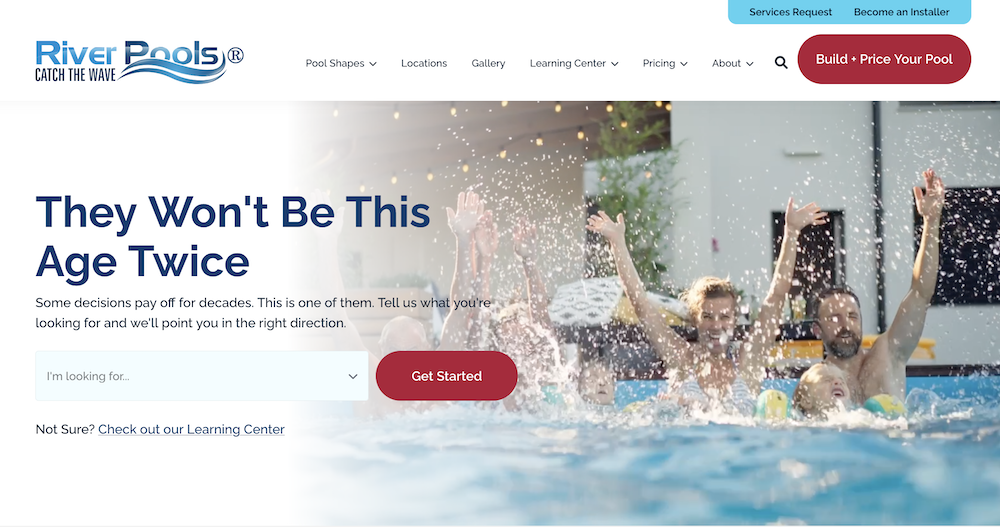
A great example comes from the website for River Pools and Spas in Virginia. The company’s homepage features a family enjoying a backyard pool alongside the headline, “They won’t be this age twice.”
Rather than focusing on the pool itself, the message highlights the limited time families have to create memories together and encourages visitors to act sooner rather than later.
Build authority through awards and expertise
People naturally trust experts. That’s why authority is one of the most powerful persuasion principles for small business websites.
A few ways you could potentially demonstrate your authority in your industry is by showcasing:
-
Industry awards
-
Certifications
-
Professional memberships
-
Educational content
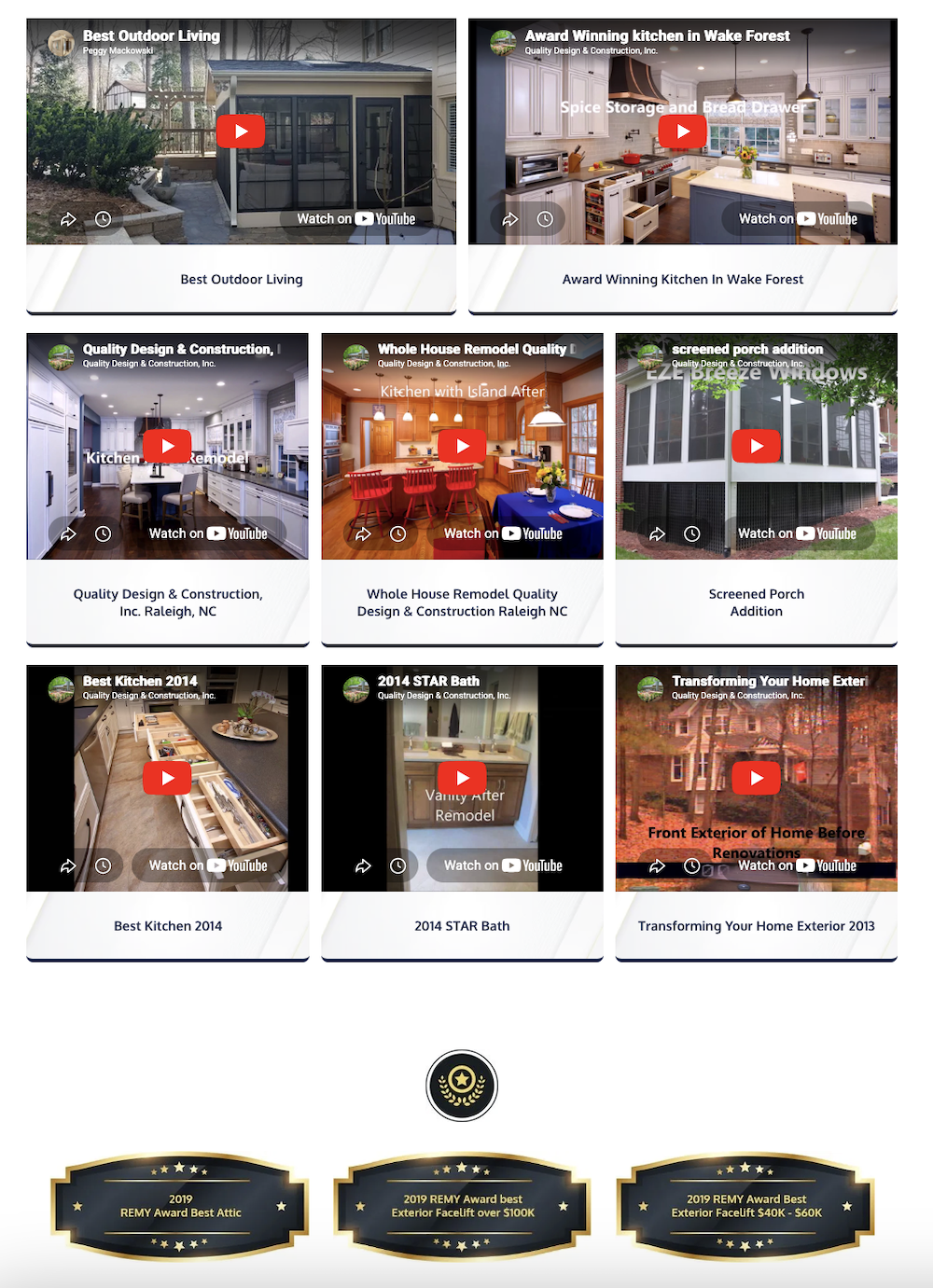
When you visit the Quality Design & Construction website- a design-build contractor in Raleigh, NC- you’ll notice that the company highlights award-winning projects on its website through videos and award badges. These elements help reinforce the company’s expertise and reputation.
Need help finding awards? Start with a simple Google search for awards in your industry, local market, or with regional associations like your chamber of commerce. For small businesses in North Carolina, a few examples of awards include:
-
Annual Business Excellence Awards by Cary Chamber of Commerce
-
Greensboro Small Business Awards by Greensboro Chamber of Commerce
-
“Best of the region” type awards in local publications
If your business hasn’t received awards yet, focus on sharing helpful information that answers customer questions. Educational content helps establish your expertise and positions your company as a trusted resource.
Encourage reciprocity with free resources
Reciprocity is the tendency for people to respond positively when they get something valuable first.
Many businesses apply this principle by offering:
-
Free consultations or estimates
-
Downloadable guides
-
Educational resources
-
Product trials
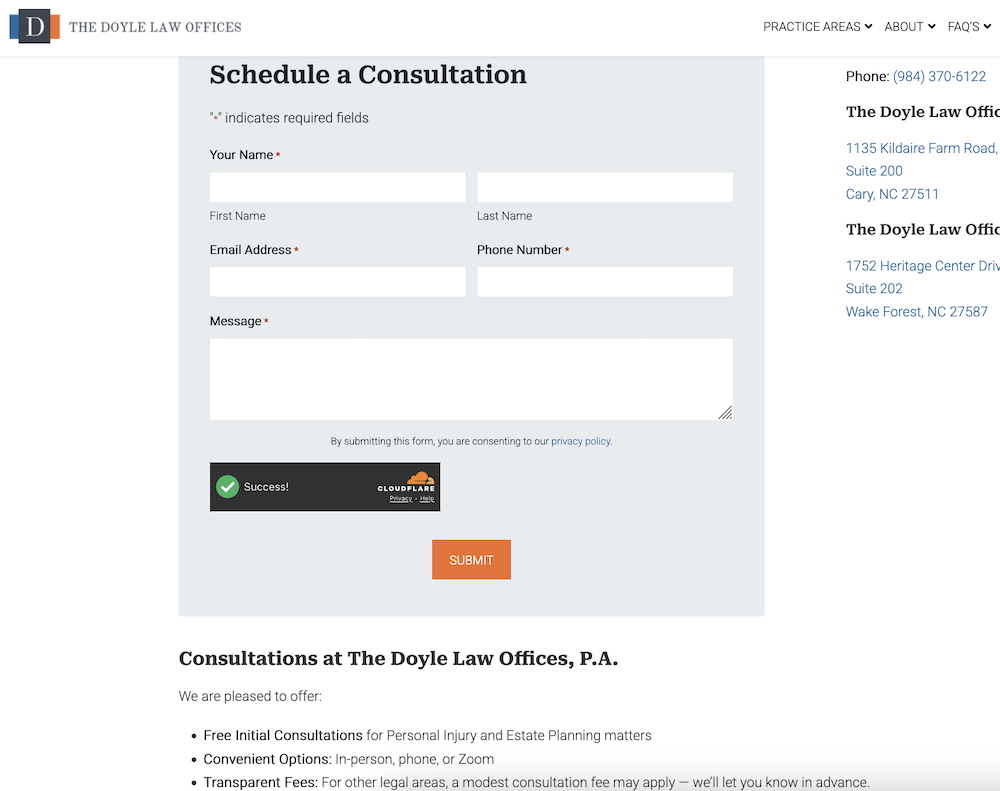
For example, The Doyle Law Offices (a law firm in Cary, NC) offers a free initial consultation on its website. This simple offer provides value upfront and makes it easier for potential clients to start a conversation.
Build confidence by explaining your process
People feel more comfortable moving forward when they know what to expect. That’s where consistency comes into play. When visitors understand the steps involved, they’re more likely to follow through.
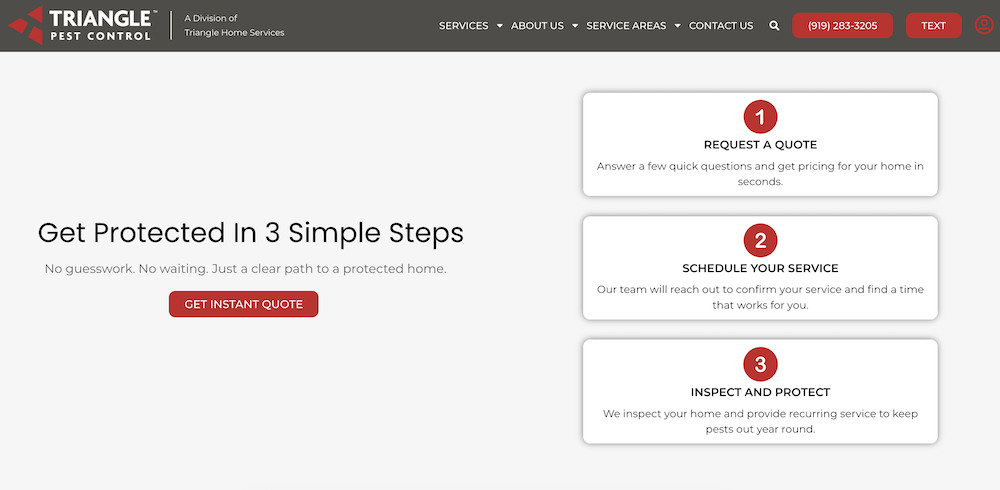
On the website for Triangle Pest Control – a pest control company in Apex, NC- you’ll see a clear overview of the company’s service process:
- Request a quote Speak with a representative about your needs
- Schedule service
- Receive ongoing protection through recurring treatments
This straightforward process helps homeowners and renters visualize the customer journey and reduces uncertainty.
Be more likeable by educating your audience
People are more likely to do business with companies they like and trust. One of the best ways to build that connection is by helping customers make better-informed decisions.
Publishing educational content on your company’s website demonstrates that you understand your audience’s concerns and want to help them find the right solution.
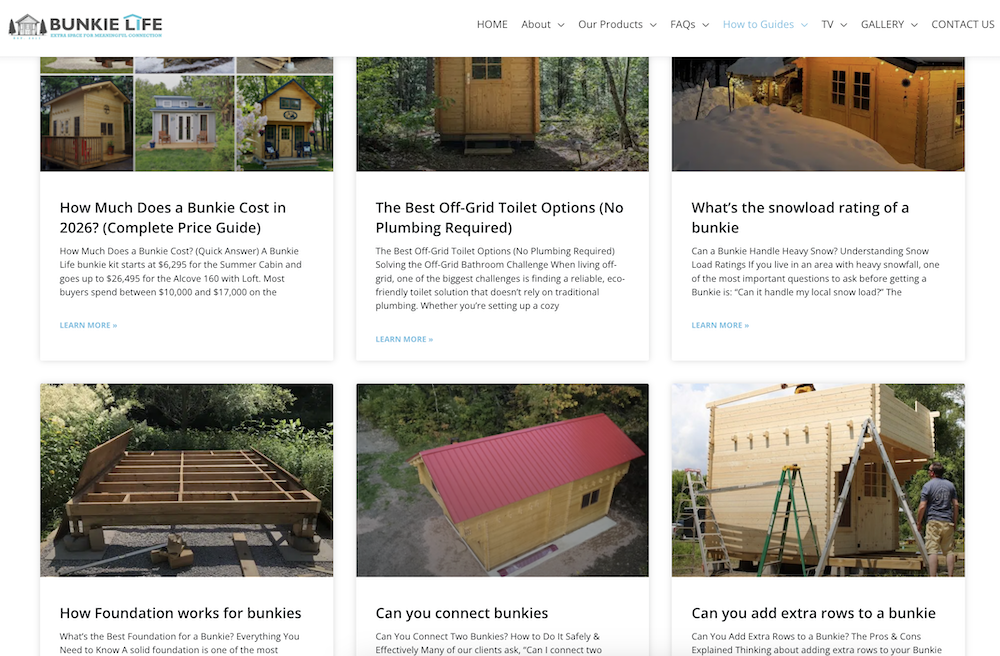
Bunkie Life provides an excellent web design example of this approach. The company offers extensive resources for people considering a small cabin kit. Visitors can explore building difficulty levels, planning information, and other helpful materials before making a purchase decision.
This type of content builds trust while improving the overall user experience.
Show unity through community involvement
People tend feel more connected to businesses that share their values, interests, or communities.
You can demonstrate unity by highlighting:
-
Community involvement
-
Charitable organizations
-
Professional associations
-
Shared interests with your audience
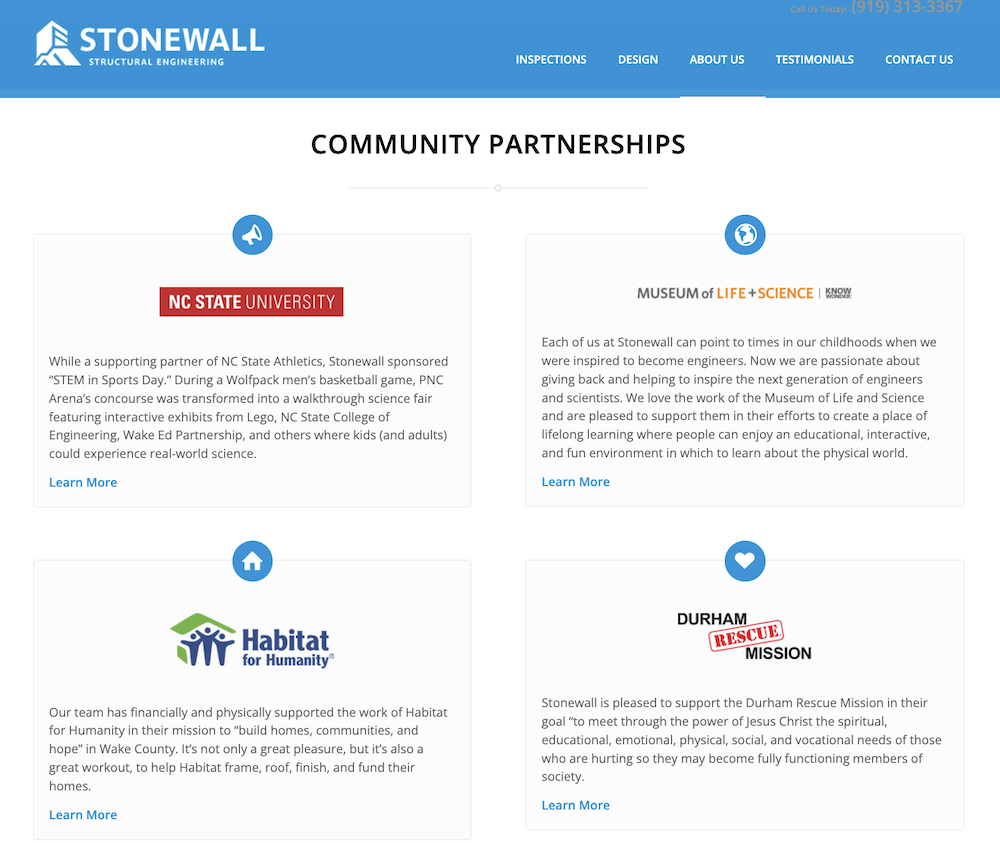
Stonewall Structural Engineering in Raleigh, NC features partnerships with local organizations that support sports, housing initiatives, animal rescue efforts, and life sciences. These connections help visitors see the company as an active member of the community.
Bringing persuasion in to your website and marketing strategy
These website design examples show that a great website does much more than just look professional. They build trust, answer questions, and guide visitors toward taking action.
The principles of persuasion can influence the buying process long before buyers ever visit your website. You can use concepts such as authority, social proof, and scarcity across other marketing channels like a Google Business Profile, LinkedIn Ads, and elsewhere.
Of course, knowing what makes a website persuasive is just part of the equation. The design, content, user experience, and technical performance all play a role in converting your visitors into leads and customers. If you’re exploring ways to improve your website, learn about our website design and development services and how we help small businesses build websites that attract and convert visitors.

Jeremy is the Founder of Conversion Fox Marketing, a transparent and award-winning web design and marketing agency based in Apex, NC. He brings 15+ years of marketing experience to help small businesses get better leads through conversion-driven websites.