
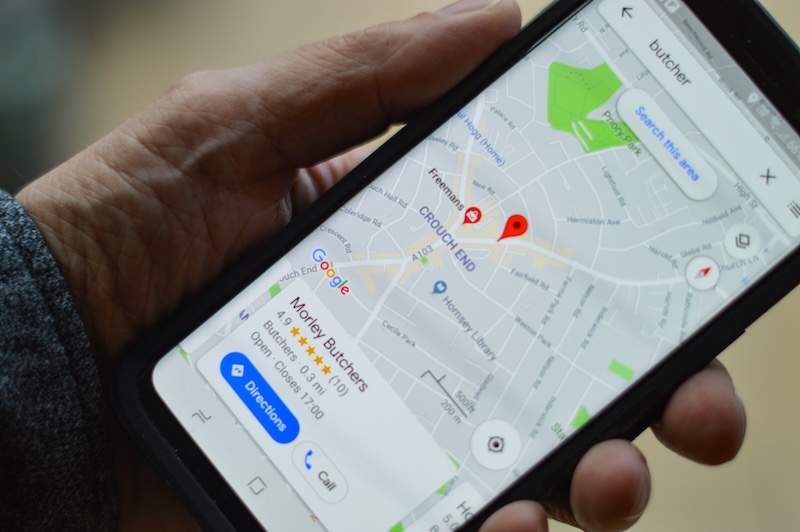
If you run a small business in Apex, NC, showing up when nearby customers search online for your products or services matters.
Someone looking for a contractor, consultant, accountant, dentist, or other local business usually starts with Google, Google Maps, or an AI tool like ChatGPT. If these platforms can’t understand where your business operates and what you offer, you might miss out on potential customers.
Generally speaking, improving local SEO doesn’t require an endless list of highly intricate tactics. A strong foundation starts with giving search engines, AI platforms, and prospective customers consistent information about your business across the web.
Here are a few practical ways we recommend small businesses in Apex strengthen their local search presence.
Claim your business listings where customers search
One of the first steps in local SEO is making sure your business exists on the platforms people use to find nearby companies.
Start by claiming or creating listings on major platforms such as Google Business Profile, Bing Places for Business, Apple Business Connect, and Yelp.
If you only have a bit of time, we recommend prioritizing your Google Business Profile because it feeds information into Google Search and Google Maps. Realistically, it might take anywhere from 10-15 minutes to complete your GBP by filling out your business name, address or service area, phone number, website, business category, hours, services, photos, and business description.
From there, you’ll repeat the process across other relevant directories. The goal isn’t to create a ton of low-quality directory listings. Instead, focus on reputable platforms that customers in Apex and the surrounding Triangle area actually use when they’re searching for local businesses.
Keep your Name, Address, and Phone (NAP) consistent across the web
As you create listings on Google My Business, Bing, and other platforms, pay attention to how you format your company’s NAP. NAP stands for name, address, and phone number.
For optimal results on your local SEO, your NAP should remain consistent across your website and major business listings. Consistency makes it easier for search engines and other platforms to connect information from different sources with the same business.
For example, if your website lists your company as “Peak City Plumbing LLC,” avoid switching between “Peak City Plumbing,” “Peak City Plumbing, LLC,” and other variations of the name across different directories when there’s no reason to do so. The same approach applies to your address and phone number.
Fortunately, you can sync some of your listings, like Google My Business and Bing Business listings, so that the information is consistent between platforms.
Consider joining the Apex Chamber of Commerce
Local organizations give small businesses another opportunity to establish your connection to Apex.
The Apex Chamber of Commerce, for example, features an online member directory where people can find businesses serving the Apex community. Membership also offers networking and other opportunities beyond SEO. If you become a member, review your directory listing and make sure the company name, address, phone number, and website match the information you publish elsewhere.
These locally relevant references help reinforce a simple but important fact: your business is connected to Apex, NC.
Add LocalBusiness schema markup to your website
Some local SEO improvements happen behind the scenes, like in the code on your website.
Schema markup is structured data added to a website to give machines more explicit information about its content. For a local company, LocalBusiness schema helps identify important details about the business in a machine-readable format.
Incorporating local business schema into a new website is one of the steps we take to build SEO-friendly websites.
Depending on your business, your structured data might include information such as your company name, website, phone number, address, service area, hours, and business type. Think of it as providing another layer of context about your business. Your website probably already tells visitors, “We’re an Apex-based landscaping company serving homeowners throughout western Wake County.” Structured data gives search engines another organized way to interpret information about the company behind the page.
If your current site also struggles with foundational SEO issues, take a look at this website redesign case study. It shows how keyword research, page titles, meta descriptions, site structure, URLs, and image optimization fit into building a more search-friendly website.
Consistently ask your customers for reviews
Reviews play two important roles in local marketing:
- First, they give prospective customers social proof. Someone comparing two local businesses wants evidence that other people have had a positive experience.
- Second, reviews strengthen your presence on the business profiles that appear when people search locally.
The easiest way to get more reviews is often the most obvious one: ask happy customers.
Send customers a short email after a successful project or purchase and provide a direct link to your preferred review profile. Here’s a simple template to help you get started:
Subject: A quick favor to ask
Hi [First Name],
Thanks again for choosing [Business Name] for [product or service]. We appreciate the opportunity to work with you.
If you have a minute, would you mind leaving us a quick review? Your feedback helps other people in the Apex area find our business and learn what it’s like to work with us.
[Review Link]
Thanks again for your support!
[Your Name]
The fewer steps customers need to take, the more likely they are to finish the review.
Reviews also have value beyond local search. When you incorporate them into your website, reviews can help build credibility as prospective customers browse your website and start deciding whether they want to contact you.
Tell Google and AI platforms the location you serve
A common local SEO mistake is assuming that search engines already understand where a business operates.
This is a big one for service-based businesses rather than brick-and-mortar stores. If your company serves customers in Apex, Cary, Holly Springs, Raleigh, Fuquay-Varina, Morrisville, or other nearby communities, mention those service areas naturally on your website.
There are several places where location information fits well.
Your Home page might explain that you are an Apex, NC business serving customers throughout the Triangle while your Service pages describe where a particular service is available. Businesses with extensive operations or services in multiple communities might also benefit from dedicated location pages with genuinely useful information for customers in each area. Avoid creating dozens of nearly identical pages where only the city name changes. Useful local content should help someone understand what you offer in their area and why you’re well-suited to serve customers in that region.
For example, the Conversion Fox Marketing website maintains a few location-specific web design service pages for cities and towns around Raleigh. The landing page for web design services in Apex, NC explains what makes our agency a good option for small businesses in that area who want to connect with a local firm who understands that geographic market.
Local SEO starts with making your business easy to understand
Local SEO comes down to sending clear, consistent signals about who you are, what you do, and where you do it.
None of the steps outlined above work in isolation, but taken together, they create a stronger digital footprint that helps prospective customers, traditional search engines, maps, and emerging AI-driven search experiences understand your business. For a small business competing for customers in Apex, NC and the surrounding Triangle, that clarity gives you a stronger foundation for getting found when local buyers start searching.
Looking for more ways to improve your website and digital marketing? Visit our Marketing Buyer’s Library for practical articles covering SEO, website design, LinkedIn Ads, and web design agency comparisons.

Jeremy is the Founder of Conversion Fox Marketing, a transparent and award-winning web design and marketing agency based in Apex, NC. He brings 15+ years of marketing experience to help small businesses get better leads through conversion-driven websites.