
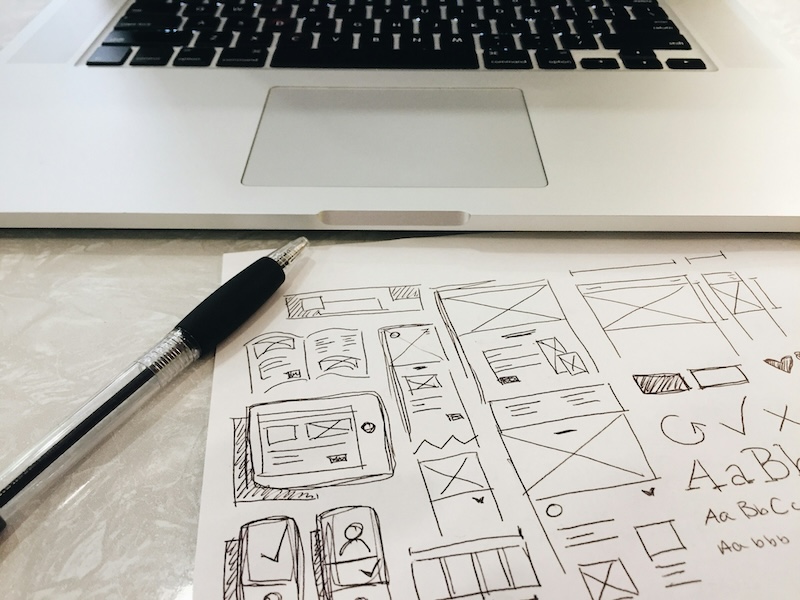
If you’ve never worked with a web design agency before, the process can feel like a black box that leaves clients wondering what’s happening behind the scenes. At Conversion Fox Marketing, we believe clients can make better decisions when they have a clear picture about the website design and development process before hiring us.
Below is the same four-step process we generally follow when building WordPress websites for small businesses throughout Apex, Cary, Holly Springs, Raleigh, and the surrounding Triangle.
Could you build your website yourself?
Of course you could. In fact, one of the reasons we openly share our process is because we believe small businesses deserve to understand how websites are built. If you have the time and a desire to learn the skills, you’re welcome to follow a similar approach yourself.
Where we add value is in years of experience leading digital marketing, SEO, conversion optimization, and web strategy and apply that knowledge to each decision as we build a new website. Every question we ask during discovery, every page we create, and every recommendation we make is intended to help your website support your broader business goals, not just have something that features your basic contact information.
If this article helps you build a better website on your own, then that’s great. If you’d rather spend your time running your business while someone else handles the planning, development, testing, and launch, we’re happy to have a conversation and determine if we’re the right agency for your business.
Step 1: Discovery and planning
Goal: Understand your business before designing anything.
Before we we even contemplate layouts, colors, or fonts, we learn about your company, customers, and goals. Your website should help prospective customers understand what you do, why they should choose you, and how to take the next step.
After years of working in digital marketing, SEO, conversion rate optimization, and web strategy, we’ve learned that the quality of a website depends heavily on the quality of the questions asked before anyone starts designing it.
We’ll look beyond surface-level information to understand how your business wins customers, where prospects get stuck during the buying process, what objections they commonly have, how you compare to competitors, and what success looks like after your website launches. Those conversations also help determine what success looks like after launch. For some businesses, success means generating more qualified leads. For others, it means replacing an outdated website that’s become difficult to maintain or understanding how much a small business website typically costs before making an investment.
During our discovery session, we’ll discuss topics like:
- Your products or services
- Your ideal customers
- Your competitors
- What makes your business different
- Your current marketing efforts
- Website goals
- Existing branding
- Desired functionality, such as forms, blogs, galleries, or downloadable resources
- Hosting recommendations for WordPress websites
The discovery process also gives us the context needed to recommend a website that supports your overall marketing strategy.
Having this information early also reduces one of the biggest reasons website design projects get delayed. Missing content, slow feedback, and unclear goals often create far more schedule issues than the technical work itself.
Step 2: Design and development
Goal: Build a website that’s intuitive, search-friendly, and focused on generating business.
2.1 Creating the Website Structure
One of the first priorities is developing a logical information architecture.
This is where years of digital marketing and web strategy experience become especially valuable.
A visitor shouldn’t have to hunt for important information or guess where to click next. Every page, section, and navigation menu should guide them naturally through your website while helping them answer the questions that influence their buying decision.
A thoughtful information architecture also creates opportunities to support search visibility. Organizing related topics together, creating logical navigation, and planning internal links from the beginning makes it easier for both visitors and search engines to understand your website. These foundational decisions become even more valuable if you later expand your website with local service pages or educational resources that answer common customer questions.
2.2 Selecting a WordPress Theme
Instead of building every website completely from scratch, we begin with a carefully selected WordPress theme from a library of professionally developed options.
This approach offers several advantages for small businesses. It keeps development costs more affordable, shortens project timelines, and provides a solid technical foundation without reinventing common functionality.
Once we’ve selected the right theme, we customize it to reflect your brand, including colors, typography, and overall style.
Choosing WordPress also gives businesses access to one of the largest ecosystems of themes and plugins available. While not every plugin is worth installing, we’ve previously shared several WordPress plugins we frequently recommend for small businesses because they solve common problems without adding unnecessary complexity.
2.3 Gathering Content
Content is often the longest part of a website project. Some clients already have polished website copy and professional photography. Others need help organizing existing information or identifying content gaps.
As content becomes available, we can start to build out individual pages while making recommendations to improve readability, user experience, and search visibility.
2.4 Building Pages
With content in hand, we begin developing your website page by page.
Depending on the project, this often includes:
- Home
- About
- Products/Services
- Contact us
- Blog
- Case studies or portfolio
- FAQs
Each page is designed to guide visitors toward taking action, whether that’s submitting a contact form, requesting a consultation, or calling your business.
2.5 Applying Foundational SEO
Foundational SEO also starts long before keywords are added to a page. Decisions about site structure, page hierarchy, navigation, and internal linking all influence how search engines understand your website. Those early planning decisions are one reason we emphasize strategy before design.
Businesses comparing multiple proposals often assume every agency includes this work as part of a website project. In reality, the scope varies considerably, which is one reason website design proposals that appear similar on the surface often have very different prices.
Step 3: Testing and quality assurance
Goal: Launch a website that works as expected.
Before launching the website, we carefully review each page to catch issues while they’re still easy to fix.This QA process includes checking layouts, links, forms, buttons, images, website performance, and formatting.
Finding issues before launch is significantly easier than fixing them afterward. A thorough review also helps avoid many of the frustrations businesses experience when websites are rushed to meet an arbitrary deadline.
Step 4: Training and launch
Goal: Help you feel confident managing your new website.
Launching your new website the beginning of your team’s ability to manage it confidently. Another advantage of WordPress is that you’re not dependent on a developer for every minor update. After launch, most clients are comfortable making routine content changes themselves after a short training session.
Before launch, we schedule a WordPress training session where we walk you through the new website and answer questions.
Topics typically include:
- Logging into WordPress
- Editing page content
- Updating text and images
- Publishing blog posts
- Basic website maintenance
- Best practices for future edits
Our goal is to leave you feeling comfortable making routine content updates without needing to lean on a developer every time you want to change a phone number or publish a new page.
Once you’re ready, we launch the website and perform final checks to confirm everything is functioning as expected.
What we'll need from you
Website projects work best when they’re collaborative.
Throughout the project, we’ll ask you for:
- Brand assets
- Logos
- Photos
- Website copy
- Product or service information
- Team biographies
- Testimonials
- Access to your domain or hosting provider if applicable
- Feedback during review stages
Providing these materials on schedule helps keep the project moving and reduces unnecessary delays.
Why we follow this process
While every agency has their own approach, we’ve found that this process works well because it balances planning, flexibility, and transparency. It keeps projects organized while giving you visibility into what’s happening during each stage instead of wondering where things stand.
As a small web design agency, we also keep communication direct. You’ll be working with the same person throughout the project rather than being handed from salesperson to project manager to designer to developer.
That consistency often leads to faster decisions, fewer misunderstandings, and a website that’s better aligned with your business goals.
Ready to get started?
Whether you’re evaluating agencies, planning your first website, or considering a redesign, understanding the process helps you ask better questions before making an investment. The same applies when comparing pricing, reviewing proposals, estimating project timelines, or deciding whether WordPress is the right platform for your business. Those decisions become much easier when you understand not only what agencies build, but why they build websites the way they do.

Jeremy is the Founder of Conversion Fox Marketing, a transparent and award-winning web design and marketing agency based in Apex, NC. He brings 15+ years of marketing experience to help small businesses get better leads through conversion-driven websites.